AppLovin Ads Is Open to Ecommerce. Is Your Store a Fit?
Use five practical checks covering validated products, video capacity, order value, test budget, and target market to decide whether AppLovin Ads deserves a serious test.
Over the past 18 months, AppLovin has become one of the most discussed names in cross-border ecommerce marketing.
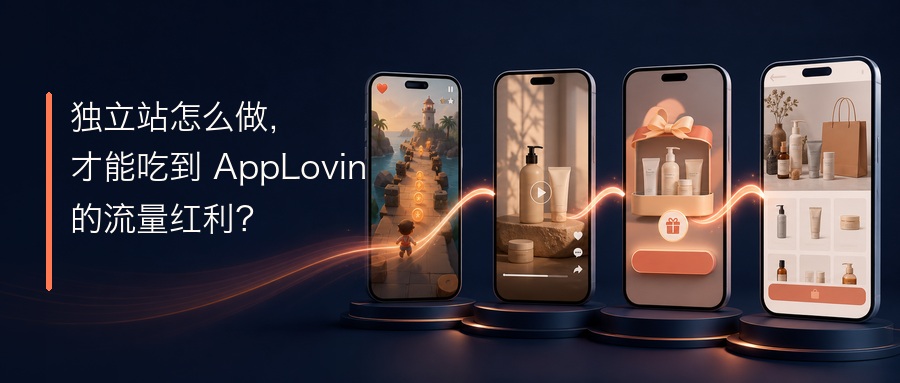
The company began in mobile-game advertising and has steadily extended its AXON AI recommendation engine into ecommerce. In June 2026, its self-service platform opened to all advertisers and took the name AppLovin Ads. An earlier earnings call put the ecommerce business at roughly a $1 billion annualized revenue run rate. In Q2 2026, consumer-advertiser spend finished 28% above the Q4 2025 holiday peak.
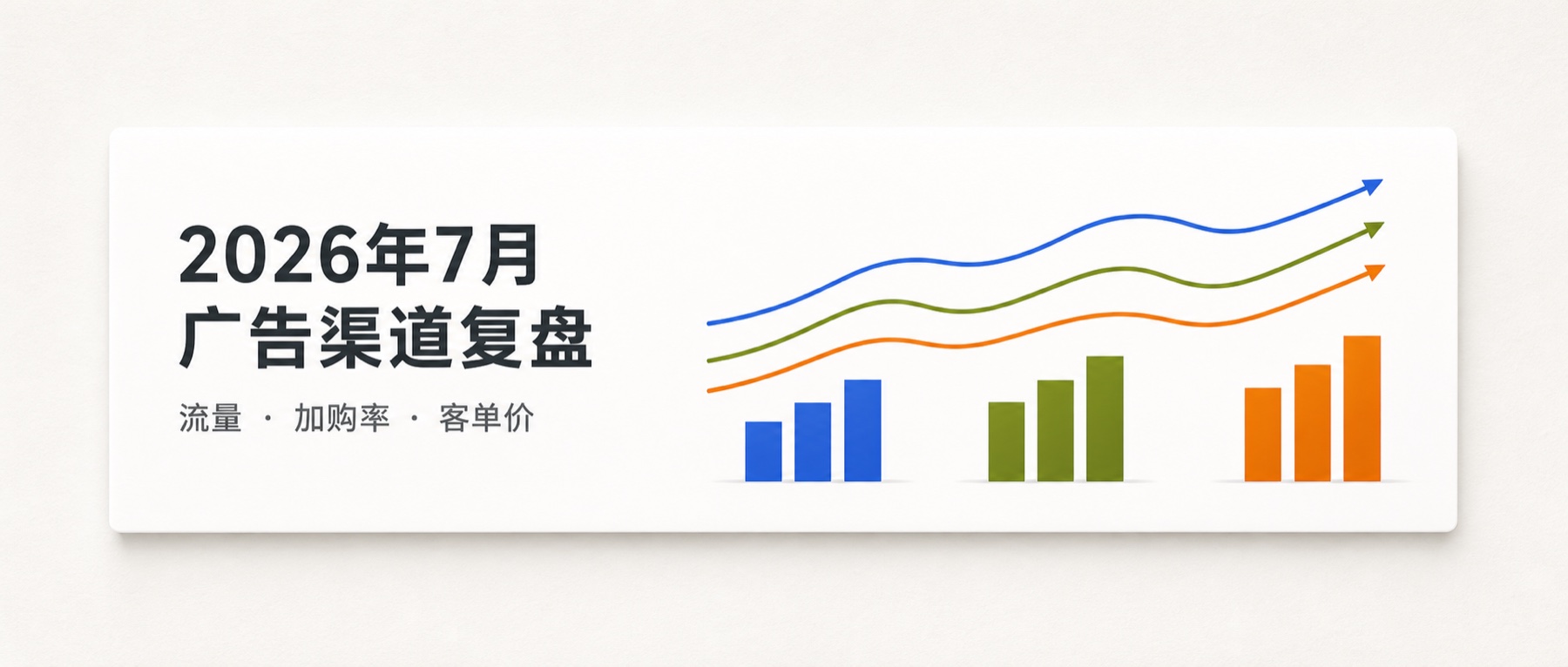
Our July channel review also shows why the channel matters. Among the three major sources we could identify directly, AppLovin / Axon moved ahead of Google to become the second-largest source of on-site traffic. Its July add-to-cart rate was 4.61%, the highest of the three.
The model is straightforward: AppLovin places ads inside mobile games that reach more than one billion daily active users, while AXON looks for buyers at the ROAS target set by the advertiser. If the names are still confusing, start with the difference between AppLovin Ads, Axon, and MAX.
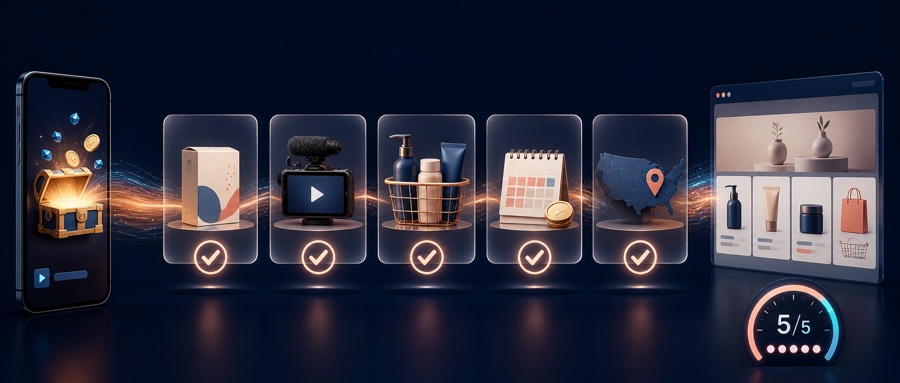
AppLovin is not a replacement for Meta, and it is not a rescue plan for a new store. Use these five checks to decide whether the channel fits your business.
Check one: You have a product already validated on Facebook
In our campaign work, products that have already performed on Facebook are often reasonable candidates for an AppLovin test. You already have evidence that the market responds to the product and its value proposition, plus a useful starting view of the audience.
Facebook performance can inform the test, but its ROAS target should not be copied mechanically into AppLovin. The platforms operate in different attention environments and need room to establish their own economics.
The harder migration is usually not the product. It is the creative. Social-feed conventions do not transfer directly into mobile games, which leads to the second check.
Check two: You can produce video consistently and adapt it to AppLovin
AppLovin ads appear at natural breaks in a game, between levels for example, or in rewarded placements that a player chooses to watch in exchange for an in-game benefit.
That attention structure does not follow the social-feed rule that shorter and faster is always better. Interstitial ads have at least a five-second unskippable window. Rewarded placements can remain unskippable for as long as 60 seconds. AppLovin says most of its top-performing videos run longer than 30 seconds.
The first three to five seconds still need to hold attention. The next 20 or 30 seconds can then explain the product in a way that a fast-scrolling feed rarely allows.
Based on AppLovin's creative guidance and our own tests, three changes matter most:
-
Captions are a baseline requirement. Many players use games with sound off. In one case published by AppLovin, the captioned version produced 64% higher Day 0 ROAS than the otherwise identical version without captions;
-
The story needs a new rhythm. Restore the customer experience, use case, and product explanation that may have been cut from a social video. Do not simply stitch short clips together without a narrative;
-
Make the offer part of the content. Roughly 40% of the top videos reviewed by AppLovin included a promotion. Gift-with-purchase hooks work particularly well as a test because the promise of getting more can move the story from a single item toward a bundle.
UGC collected for Instagram or TikTok is a useful starting point, but it should not be uploaded unchanged.
Teams that can produce a steady flow of variants each month face a much lower migration cost. Without enough variation, the system has less creative diversity to learn from and the campaign may never produce a useful conclusion. For the full creative journey, read how to connect AppLovin video, offers, and the ecommerce landing page.
Check three: Do not let the market-wide AOV set your ceiling
Our July review reported an AppLovin average order value of about $56. Why, then, do we also see stores reaching $70 to $100?
The ecommerce ecosystem around AppLovin is still early among Chinese operators, and a large share of the volume comes from single-product winners. Those orders naturally pull down the market-wide average.
The picture changes when apparel and gifting stores generate multi-item baskets. In our optimization work, items priced around $20 to $30 can produce a $70 average order value, and well-optimized cases can reach $100.
The idea that AppLovin only works for low-AOV products is an early-channel stereotype, not a useful operating rule.
The constraint is not that mobile gamers lack purchasing power. More often, advertisers are still learning how AppLovin creative works and how the post-video Interactive Page, commonly called an end card by Chinese media teams, should connect to the store landing page.
Check four: You can protect a dedicated test budget
The billing requirement is much lower than many rumors suggest.
After the June opening, a new account can add a credit or debit card before launch. AppLovin charges the next day's budget in advance, reconciles it against actual spend, and moves unused funds into the account balance.
The practical budget threshold is also lower than the claim that every advertiser needs to spend $50,000 a month. In our tests, a daily budget in the hundreds of dollars can begin delivering and generating learning data.
What matters is that this is a separate test budget that can run for two to three consecutive weeks without taking money away from a profitable channel. The budget still needs to produce a meaningful number of purchase signals. As an internal planning reference, we often start with roughly the budget required to generate ten daily purchases in an existing channel, then adjust to the store's economics.
Check five: The United States is your primary market
AppLovin reaches more than one billion daily mobile-game users. In a Kantar study commissioned by AppLovin, 2,500 U.S. mobile gamers spanned adult age groups with a relatively balanced gender split. The respondents also showed strong household purchase authority and active online-shopping habits.
Geography still matters. AppLovin's current launch checklist recommends targeting available regions outside Western Europe and grouping multiple eligible countries in one campaign to create broader learning signals.
If Western Europe is the center of your business, the channel is not a good fit right now.
The five-point checklist
- You have a product already validated on Facebook;
- You can produce video consistently and adapt it to the mobile-game environment;
- You can use bundles and multi-item baskets instead of treating market-wide AOV as a ceiling;
- You can ring-fence a test budget for two to three weeks;
- The United States is your primary market.
If all five are true, AppLovin deserves a serious test.
Final thought
The decision is not complicated once the five conditions are visible. The larger performance gap often appears after the click, when a store must carry the same product, offer, and intent into the shopping experience.
Fintouch has focused on helping ecommerce stores turn hard-won visits into clearer purchase opportunities.
Founded in 2019, our team of more than 40 people has served over 10,000 ecommerce stores with revenue-growth solutions. For the path from ad click to ongoing customer communication, we currently offer two products:
-
Boost carries ad traffic into a video landing-page experience designed to support conversion and multi-item orders;
-
Stream is a ready-to-run email revenue solution for ecommerce stores.
If you are testing AppLovin or want to strengthen the experience after the ad click, follow Fintouch for the next article in this series.
Have you tested AppLovin? What ROAS have you seen? We would like to hear about it.
Sources: AppLovin's AppLovin Ads is now open to all advertisers, How to make high-performing videos, Launch checklist, Billing, and The high-value mobile gaming consumer, plus AppLovin Investor Relations' Q2 2026 financial results. Budget, test-duration, and $70-$100 AOV references are observations from Fintouch campaign work, not platform performance guarantees.