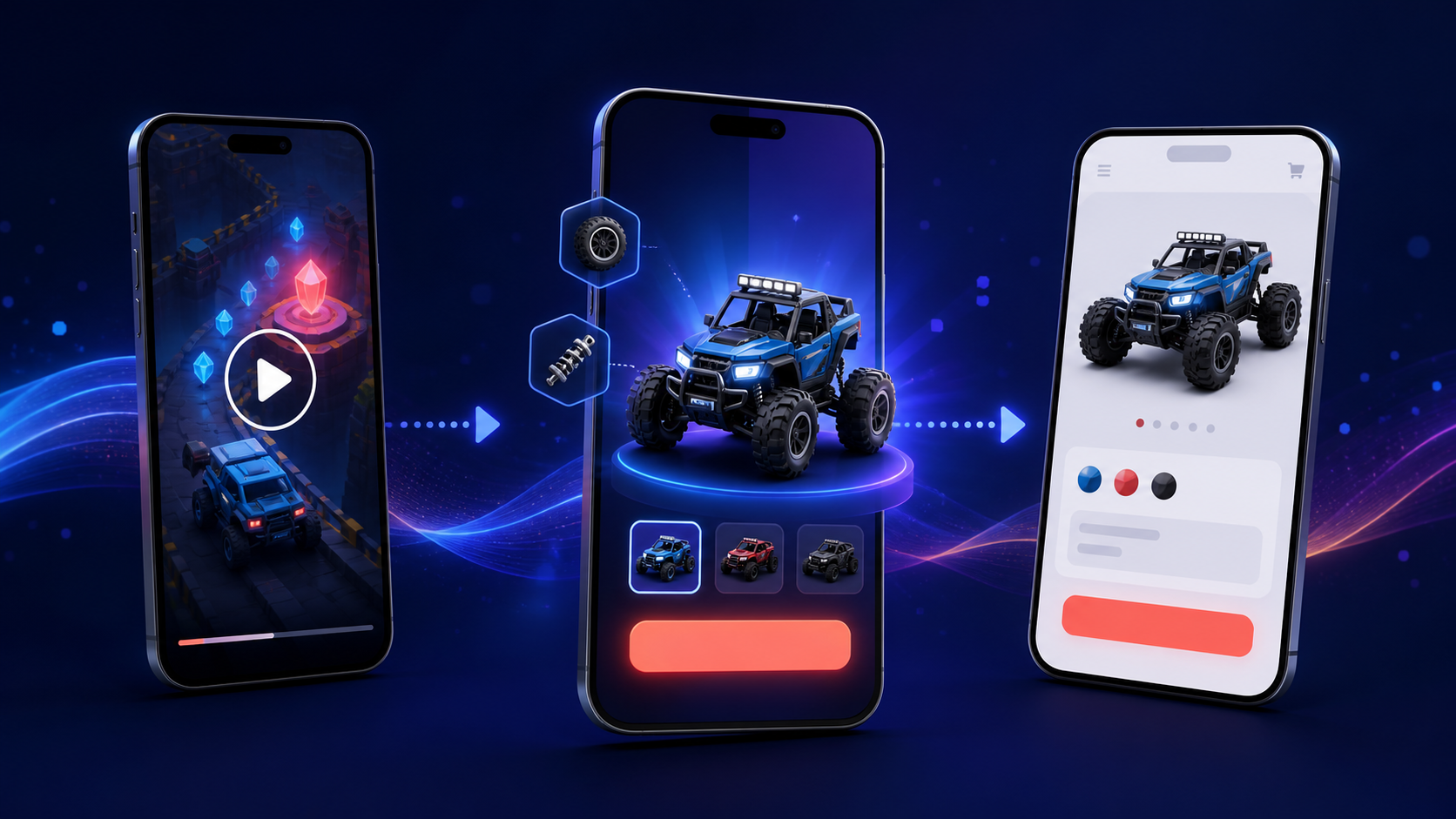
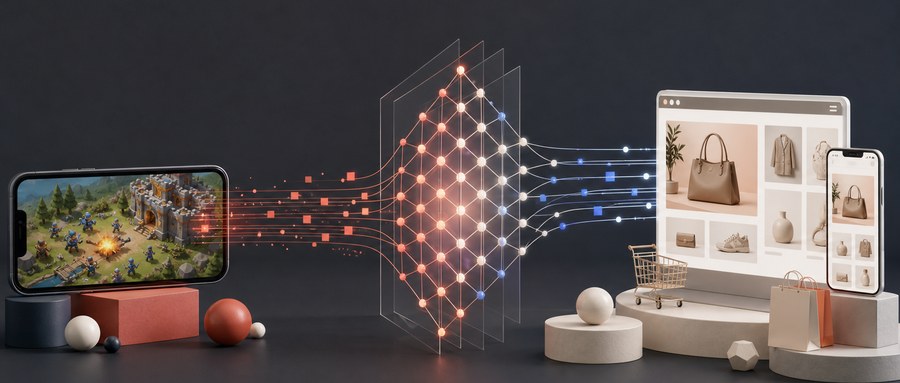
How Ecommerce Sellers Can Capture the AppLovin Opportunity
Learn how AppLovin's mobile gaming environment changes video storytelling, offers, UGC, social proof, creative testing, and the path from ad to landing page.
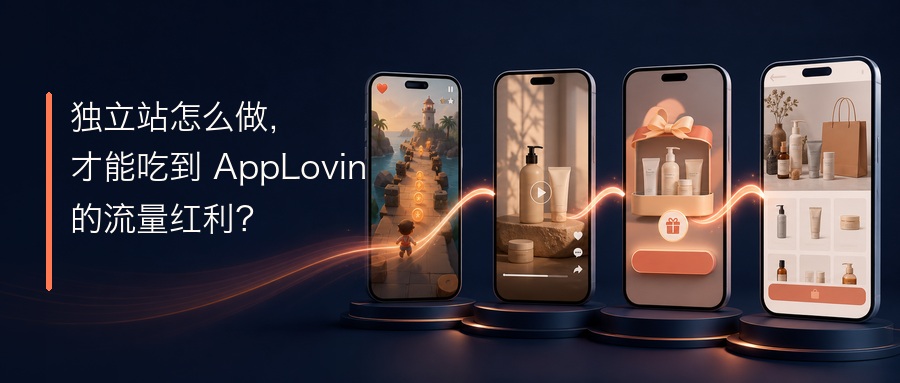
AppLovin is attracting plenty of attention from ecommerce sellers, but many teams still do not have a clear picture of what an AppLovin shopping ad looks like or where customers encounter it.
The platform also has an unusual advantage: competitors' active creative is much harder to track systematically than it is on Meta. In our campaign work, that can give a successful idea a longer useful life. A concept that lasts one or two weeks on Facebook may continue working for a month on AppLovin.
That is an operating observation, not a platform rule. Still, it makes three questions worth answering: where does the ad appear, what state of mind is the customer in, and how should an ecommerce store carry that attention into a purchase? If the two main placements are still unfamiliar, start with the difference between AppLovin interstitial and rewarded video ads.
An advertising network inside mobile games
AppLovin was built around mobile game marketing. Free games needed advertising revenue, while game publishers needed new users from other games. The network developed its prediction and distribution capabilities inside that exchange.
Today, more than one billion people play mobile games each day. They do not think of themselves as AppLovin users. They are playing Sudoku, match-three games, solitaire, or word games. Ads appear between rounds or when a player chooses to watch one in return for an in-game reward.
The audience is broader than the stereotype. A Kantar study commissioned by AppLovin found that U.S. mobile gamers broadly resemble the adult population across age, gender, income, education, and geography.
Our own ecommerce observations add another useful boundary. Women from their thirties through their sixties with disposable income can be especially important for apparel, gifts, and other multi-product stores. In those store segments, average order value can reach $70 and, in stronger cases, $100.
That does not contradict the $56 AppLovin average order value in our July 2026 advertising channel review. The broader China-based AppLovin ecommerce ecosystem is still weighted toward single-product offers, whose order volume pulls down the overall average. Multi-product apparel and gift stores form a different operating segment.
The constraint is not simply whether mobile gamers can spend. More often, ecommerce teams are still learning the creative format and how the Interactive Page after the video should connect with the brand landing page.
The scarce resource is uninterrupted storytelling
On Meta or TikTok, a customer's thumb is always ready to move to the next post. An ad competes with friends, news, and entertainment for the few seconds before the next swipe.
AppLovin shopping ads have a different rhythm. They often appear between levels or after the player has actively chosen to watch an ad for a reward. The viewer understands why the ad is there and what comes next. AppLovin's consumer research also reports more positive emotions during mobile gameplay than while browsing social media.
That gap between levels creates more than a few extra seconds of exposure. It gives a brand enough room to complete a thought.
A video can open with a specific problem, help the viewer recognize themselves in it, introduce the product naturally, explain why it works, and then use an offer, gift, or time limit to move established interest toward action.
The first three to five seconds still need a hook, but the hook is not the whole ad. The next twenty or thirty seconds are where the story earns its value.
Start by restoring the story
AppLovin's current creative guidance recommends full-screen 9:16 video, supports videos up to 60 seconds, and encourages complete stories of 30 seconds or more. The opening seconds keep the viewer; the remaining time explains the brand, product, and value.
The first step is therefore not to make ten more disconnected hooks. Revisit the customer stories, use cases, problem explanations, and product demonstrations that may have been cut from short social ads.
On a social feed, a brand may only have time to say that a product is good. On AppLovin, it has a chance to show why.
Test gift-with-purchase and other concrete offers
AppLovin's review of high-performing videos found that roughly 40% included a promotion. Examples included percentage or fixed discounts, free shipping, buy-one-get-one offers, and a free product or service with purchase.
Common executions include 10% to 40% discount codes, first-order gifts, buy two and get one free, or multiple free items with an order. The point is not merely to display a discount. The offer should be part of the story.
It can appear in the opening hook or close the argument after the product value has been established. Either way, the story and the offer need to make sense together.
In our own tests, gift-with-purchase mechanics are especially worth exploring on AppLovin. They carry a natural narrative: receive more, make the bundle worthwhile, and act while the offer is available. They can also move a customer from a single item toward a multi-product basket.
We have developed landing-page executions specifically for that use case. Our current observation is that gift-with-purchase deserves priority testing for creative engagement, but performance still depends on the product, offer strength, and the experience after the click.
Urgency can help for the same reason. Messages such as "sale ending soon" or "while supplies last" answer the final question: why act now rather than later?
Speak to one recognizable person
AppLovin found that around 30% of top ads explicitly name the audience the product is for. Examples include:
- "As empty nesters..."
- "As a new college graduate on a budget..."
- "My husband is in his thirties and could not find the right..."
- "Is it possible to get a flat stomach after 50?"
These openings do not claim that the product is for everyone. They give one group an immediate reason to recognize themselves.
Many strong AppLovin videos use a UGC style, either through one complete customer story or a sequence of customer reviews. Existing Instagram and TikTok assets can be a starting point, but they should not simply be copied unchanged.
First, add clear captions. Many mobile gamers play with sound off. AppLovin's review found prominent captions in 95% of the top-spending videos it studied. That figure does not predict a specific lift for every category, but it makes captions a baseline requirement rather than decoration.
Second, rebuild the narrative rhythm. Several short clips can become one coherent progression: establish the problem, show the experience and change, and close with proof or an offer. The objective is not to make a short video mechanically longer. It is to restore the story that the social edit broke apart.
Social proof is part of the story
Halfway through a story, the viewer is often asking one question: why should I believe this?
AppLovin found social validation in 24% of top videos. Common approaches include a verifiable review count, evidence that a product is receiving attention, or an accurate note that stock may sell out.
Those details should answer why other people believe the claim. Review totals, sales, inventory, and media recognition must all be supportable. False social proof spends trust before the customer has even reached the store.
Another approach is an unresolved UGC opening. AppLovin found this pattern in about 15% of top videos. The ad begins with doubt, frustration, or a personal problem and withholds the answer long enough to create curiosity.
The value is not exaggerated language. It is the unanswered question that gives the rest of the story a job to do.
Optimize the journey, not one video
The video is only one part of an AppLovin ad.
Assets are organized into Creative Sets. Each set requires at least one video and one Interactive, can contain up to ten of each, and lets the system test combinations.
That structure is a reason not to judge every asset only by the ROAS attached to its last click. AppLovin's current guidance says the median customer sees eight distinct ads across ten impressions before a first purchase. An earlier creative may introduce the brand, while a later one closes the sale. Pausing every upper-funnel asset with lower direct ROAS can weaken the sequence.
The better question is not only which creative received the order, but what role each one played in the decision.
Video, Interactive Page, and landing page must tell one story
In our client work, the difference rarely comes from one "magic" asset. It comes from whether video, Interactive Page, and landing page preserve the same customer expectation.
The sequence is:
Vertical video -> post-video Interactive Page (AIP) -> optional Dynamic Catalog -> ecommerce landing page
The video creates the situation and tells the story. The Interactive Page remains inside the ad and acts like a small landing page, reinforcing the product, offer, and reason to click. Only after the click does the customer reach the brand's own store.
At that point, the advertised product must be easy to find and the promised offer must still exist. If the Interactive Page promotes a gift but the landing page never mentions it, or the video features one item but sends the customer to a generic homepage, the expectation breaks.
Visual consistency alone is not enough. Product, message, and offer must line up from one stage to the next:
The video tells the story. The Interactive Page carries the interest. The landing page fulfills the promise.
That is where AppLovin's acquisition opportunity meets the operating capability of an ecommerce store. A hero product captures attention, while the broader assortment can increase basket size and improve the economics of the traffic.
If the platform names are still unclear, start with the difference between AppLovin Ads, Axon, and MAX.
Sources: AppLovin's Creative quick start guide, Video best practices, The importance of creative volume and diversity, and The high-value mobile gaming consumer.